The new way Gen Z is making money

With AI making the job market uncertain, we attempt to answer what the future of work looks like in an AI native world.
Key takeaways
- The traditional college-to-career pipeline has collapsed due to credential inflation, rising costs, and AI automation of entry-level roles.
- Employers now prioritize demonstrable skills and portfolios over degrees, shifting to a skill-based hiring model.
- Gen Z is building independent careers by learning specialized skills online and selling outcomes directly to multiple clients.
For decades, the path to a stable life in America followed a simple path: Go to college, get a degree, get a job. It was a promise repeated by parents, schools, employers, and policymakers. And for much of the 20th century, the data supported it. But today, that promise is broken. Millions of students are graduating into one of the weakest entry-level job markets in modern history. According to a recent Stanford analysis, college graduates are facing higher unemployment rates than the national average. And since late 2022, entry-level job postings in some sectors have fallen by up to 30%. Even top students with strong GPA, internships, and extracurriculars report submitting hundreds of applications without receiving any interviews. So today, we investigate what's actually happening in the job market and how Gen Z is earning an income in an AI native world.
Young workers are being hit the hardest for three structural reasons. First, the supply of degrees has grown much faster than demand. In 1992, about 26% of U.S. workers held bachelor's degrees. Now, that number is nearly 45%. But the number of jobs that truly requires a degree has not grown at the same pace. Economists describe this as credential inflation. As degrees become more common, they stop functioning as a clear hiring signal. Not because education lost value, but because it no longer separates candidates. Employers responded by raising requirements. Roles that once only required a degree now require several years of experience, even when the work itself hasn't changed. The result is a paradox at the center of the modern job market: graduates need experience to get hired, but the jobs that once provided that experience are disappearing. At the same time, cost of education increased dramatically. Since the 1980s, college tuition in the United States has risen by over 1,200%. Wages have not kept pace. Student debt now exceeds $1.7 trillion, and the average graduate enters the workspace tens of thousands of dollars in debt before earning a single paycheck. It's the first time in U.S. history where a generation is statistically projected to earn less than their parents, even with more education. A degree still provides long-term benefits on average, but the certainty it once provided, especially early in a career, has weakened. Then came artificial intelligence. AI has not replaced the entire workforce, but it has reshaped how work gets done, especially at the junior level. Tasks traditionally handled by entry-level employees are now automated or AI assisted: drafting documents, summarizing research, writing basic code, or preparing reports. These tasks once justified hiring large numbers of junior workers. Now, they often require fewer people. As a result, entry-level roles, the ones designed to convert education into experience, have begun disappearing. After late 2022, data shows a sharp decline in entry-level white collar job postings. In some sectors, postings fell by nearly one third. These aren't mass layoffs, they're hiring freezes. When entry-level roles shrink, the entire career pipeline backs up. Simultaneously, many of the listings students are actively applying to aren't active listings at all. Employers increasingly post ghost jobs: positions kept open to collect resumes, test the market, or signal growth without an intent to hire. To applicants, the market looks open. But in practice, it isn't. This leads to the next pressure point, the growing skill gap. As technology accelerates, the distance between what schools teach and what employers need is widening. Colleges respond to the incentive they're given: graduation rates, rankings, and placement metrics, not how quickly students can perform once hired. As a result, students are taught to compete by building resumes that fit a standardized hiring system: Internships, extracurriculars, and high GPA. Now, those signals aren't pointless. They make sense in a world where large organization need a shortcut to screening thousands of applicants. But when education focuses on qualifying people for jobs instead of preparing them to do the work, it misses what now creates value: skills. And that gap, it shows in the data. In a 2024 global survey, nearly 60% of new graduates said they struggled to find work because they didn't match the skills employers now prioritize. These people didn't make a wrong decision going to college. They made the right decision in a world that no longer exists. Employer surveys show the same problem. Graduates are credentialed but not job ready. As a result, the hiring question has changed. It's no longer who looks best on paper. It's who can do the work. Today, this shift is increasingly known as skill-based hiring, where employers place more weight on demonstrable ability, portfolios, projects, and proof of work, and less on credentials alone. Studies increasingly show that skill-based hiring is outperforming traditional screenings on performance and retention, leading to some companies building alternative pathways entirely. Firms like Palantir have introduced paid fellowships that bypass the traditional degree route entirely, training young people directly for real roles without the debt. This change is the foundation of what's now emerging as the skill economy. The skill economy is a labor model where skills, not degrees, are the primary unit of value. It's a shift from asking what job title you have to what can you do and who needs it right now.
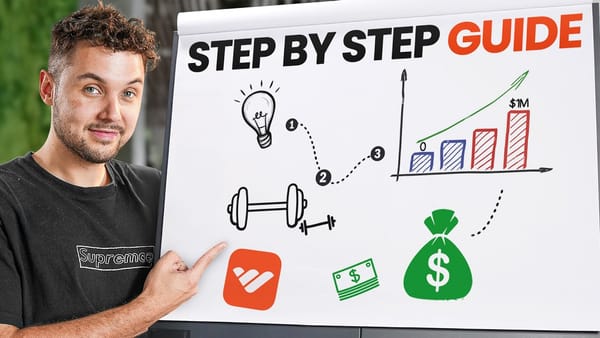
For our parents' generation, the risky choice was skipping college. For this generation, the risk might be relying on it alone. In many parts of the market, where you went to school matters less than what you can produce. Can you edit videos, run ads, build apps, automate workflows, build systems, or use AI to build something people want? If the answer is yes, you're competitive in today's labor market, regardless of credentials. The idea isn't new. What's new is the speed, scale, and sheer number of people being forced into this at the same time. The shift is already visible across white collar work. Teams are smaller, hiring is faster, and value is measured less by tenure and more by contribution. That's why people with narrow but valuable expertise can compete in today's global labor market. And we've seen a version of the shift before. Before platforms like Uber and DoorDash, blue collar workers had limited access to work. Jobs were tied to specific employers and locations. The gig economy didn't eliminate jobs. It just permanently reorganized how they worked. The skill economy is doing something similar but for white collar work. In the traditional model, careers were built vertically. You joined one company, worked full-time, and then climbed the ladder. The skill economy allows for a different structure. Many skilled workers now split their time across multiple organizations: 2 hours here, 3 hours there, delivering a specific outcome, then moving on. This creates flexibility, but also leverage. Workers focus on where they add the most value, and companies only pay for the expertise that they need. Income is no longer tied to a single employer. In many cases, this increases earning potential rather than limiting it. Specialized skills applied across multiple teams can provide more value than a single full-time role. Careers look less like ladders and more like networks. This is where artificial intelligence matters most. AI isn't replacing Gen Z. AI is a new tool Gen Z is using to build independent skill-driven careers. It allows individuals to operate like small studios learning skills online, applying them immediately and selling outcomes directly to the market.
Harry is 22 years old. He doesn't sit inside of a marketing department at a software company. He sells launch videos to them. He makes two to four launch videos per month. He charges each company individually and he now earns over half a million dollars per year doing so. "I am Harry Beach. I am 22 years old". "And what do you do for work?" "Yeah, I started making specifically AI commercials 6 months ago now". "How much you get paid for one of these commercials?" "For each AI commercial, I charged between 20 and 40K". "Did you go to college?" "I did for a period of time. I dropped out because I realized this was not the path to getting what I wanted. It was just a waste of time. My peers were not serious about their goals. Maybe some were, but for the most part, there was a big emphasis on like fun, go to parties." "I was always asking teachers like, 'How is this going to help me? Like seriously, what is this going to do?' It's actually true. Like now I've left college, I can confirm". "Yeah. And now you're making AI, like you're using AI video tools to make commercials for companies. I've imagined that AI was never even mentioned in college". "The way I see it is like the internet is like breaking open into this Wild West place. There's all these new areas for value to be exchanged. It's a cool time because you can kind of like be the first to some of those, make money really easily, or like, you know, you can make a name for yourself. And there's so many new roads and new paths that you're just not going to learn in college. And actually, a lot of those paths that you learn in college aren't that applicable to what's happening today. At least in the creative field, marketing field, even just like starting a business in general". Harry isn't a child prodigy, or even an Ivy League dropout. He just stumbled into this new economy early and is reaping the benefits.
Evan is 20 years old, and brands and music artists hire him to run their clipping campaigns. He takes videos they already have, turns them into short clips, and helps them reach more people online. He manages multiple campaigns at once and charges brands for results, not hours. "I run a clipping agency online where I help any brand that needs marketing get billions of billions of views each month through a service called Clipping. As I was in college my freshman year, I realized how one degenerate it was and then two, how I was on pace to make maybe 3 to 4 grand a month at at a full-time job, right? Plus, I'm working 40 hours a week. It was at that moment I have $20 in my bank account. I'm like, I need to change something in my life: either get a job or try to make money online. And I I wanted to find that one online business where I didn't need any capital upfront and nobody was doing it. So, why not start an agency where you provide this service to these brands that want to implement clipping into their strategy. Again, I was sitting in class broke as hell. I wanted to make money online. I knew I liked marketing. That's how I kind of started looking into clipping and and what it could do for other brands and how they can implement it into their strategy. And that's kind of where I got that spark from". "And you just reached out to a random person, got your first client?" "Yeah, I reached out to my first client, ran complete random on a whim, reached out maybe to a hundred people. He was probably like first person to respond. Launched his campaign and clearly it worked. $2,000 spent in one less than 24 hours. After that campaign, they're like, 'Hey, we have this other artist maybe no money.' Um, I knew this is kind of like our breakthrough. So, we had to really do good on this one. We started working with them. They launched a lot bigger campaigns like 10,000, 20,000, $5,000 campaigns. We kind of used them as a case study on our website. The website funnel helped us a lot with getting leads, people booking calls. Um, it just kind of took off really rapidly." "And then now you're 10 months in. What's the most money you've made in a month?" "It was November. I made $18,000 in one month. I mean, in less than a year, I've probably since the beginning, I probably made like 80 to $90,000. Like, it took me 4 months to change my life. It It could take you a year. Um, a year is really all you need. And if it's not working, then go to college." It took him 4 months, not four years, to learn a skill that is now earning him a six-figure income.
For many Gen Z workers, this is already normal, not experimental, just a specific skill applied to a clear business problem and sold directly to the market. This is the future of work Gen Z is stepping into. If you're in college right now, the takeaway isn't that education doesn't matter. It's that education alone isn't enough. In a skill economy, students who do best use college as a place to build skills, proof, and leverage at the same time. A useful question to ask yourself each year is, "What can I produce now that I couldn't produce before?" Can you edit a video, build an app, design a website, or just use a new AI tool? Grades show efforts. Portfolios show capability. Projects, shipped work, and real outcomes increasingly determine access to opportunities. College is one of the few moments in life where experimentation is low risk. Used well, college becomes a sandbox and not just a checklist to get a piece of paper. For colleges, this isn't an existential threat. It's a structural challenge. Higher education isn't being replaced. It's being asked to adapt. The traditional model assumed a stable career ladder inside one organization. That ladder is no longer the default. Graduates now move across projects, companies, and platforms, and they're evaluated more on output than tenure, and they'll need to update their skills repeatedly over time. Institutions that succeed will integrate skill building into core programs, treat portfolios as seriously as exams, and align more closely with how hiring actually works. This doesn't weaken higher education. It strengthens it. The shift we're witnessing is not a collapse. It's a reorganization. The degree economy assumed stability. The skill economy reflects speed, flexibility, and outcomes. Degrees still matter, but skills now travel farther. And in a labor market that rewards capability over credentials, the central question is no longer whether college is worth it. It's whether we're being honest about what it's worth now.